Related Article

What Are Fossil Fuels? Definition, Types, Examples and Differences from Non-Fossil Fuels
If you have ever wondered what is fossil fuel, the answer has always been quite simple. It is a fuel made from the remains of plants and animals that lived around millions of years ago. Over time, heat and pressure changed these remains into coal, oil and natural gas.
The fossil fuels meaning is also easy to understand. These fuels take millions of years to form. So, we cannot make them again quickly. We use them for transport, electricity, heating and many everyday products. Knowing how they form gradually and how they affect the environment helps us make better choices about the energy we use.
Key Takeaways
- Fossil fuels basically come from the remains of plants and animals that lived around millions of years ago.
- Coal, oil and natural gas are the major types of fossil fuels.
- Fossil fuels are non-renewable as they take millions of years to form.
- Pollutants like carbon dioxide are released when we burn fossil fuels.
- Getting fossil fuels from the ground also affects land and water.
- Solar, wind, hydro, biomass and nuclear energy are some non-fossil energy sources.
- Using less energy can also help reduce the use of fossil fuels.
What Is a Fossil Fuel?
So, what is fossil fuel? In simple words, it is a fuel made from very old plant and animal remains. These remains were buried under layers of soil and rock. Heat and pressure then changed them over millions of years.
That is the basic fossil fuels definition. Coal, oil and natural gas are the three main types. They contain carbon that once came from living things. When we burn fossil fuels, the carbon in them is released, mainly in the form of carbon dioxide.
We use these fuels in many ways. Oil is used in vehicles. Coal is used to make electricity. Natural gas is used for cooking, heating, power and industry.
How Do Fossil Fuels Form?
The formation of fossil fuels takes a very long time. Almost about millions of years.
It starts when the remains of plants and animals get buried inside the ground. Over time, more and more layers of soil, sand and rock cover them. Heat and pressure then slowly change this buried material.
For this to happen, there are three major stages.
Organic Burial and Sedimentation
It mainly starts when plants and animals die. Their remains slowly settle in places such as swamps, deltas and continental shelves.
They then get covered by mud, sand and other material. With very little oxygen, the remains do not fully break down. More layers keep building up over them.
Kerogen Formation and Maturation
As the material gets buried deeper, the heat and pressure increase.
The organic matter then slowly changes into a material which is called kerogen. With the right amount of heat and pressure, it can later change into oil or natural gas. Buried plant matter can also change over time and become coal.
This is not a quick process. It takes millions of years.
Here's How Thermal Conversion Produces Oil, Gas and Coal
As the buried material moves deeper into the ground, it experiences more heat and pressure.
Slowly, it changes into oil, natural gas or even coal. The type of material, heat and pressure, all affect what is formed.
This is why fossil fuels are called non-renewable. We use them much faster than they can form again.
Types of Fossil Fuels and Examples
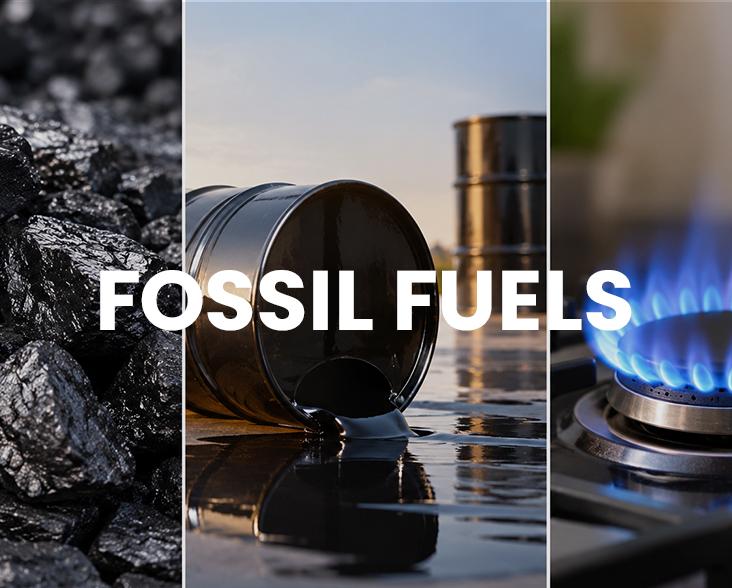
There are different types of fossil fuels, but the three main types of fossil fuels are oil, coal and natural gas. They are different in form and have different uses.
| Fossil fuel | Form | Main uses | Examples |
|---|---|---|---|
| Oil | Liquid | Transport and industry | Petrol, diesel, jet fuel and plastics |
| Coal | Solid | Electricity and industrial heat | Electricity and coke |
| Natural gas | Gas | Power, heating and industry | CNG, LNG and chemicals |
An example for fossil fuels is crude oil. It is taken from underground and sent to a refinery. There, it is made into products such as petrol, diesel and jet fuel.
Coal is another example. It is used to generate electricity. Natural gas is also one of the widely used fossil fuel. It can be used for power generation, heating, transport and industrial activities.
Oil and Petroleum
Crude oil is nothing but a liquid made up of different hydrocarbons. It is extracted from underground and sent to a refinery, where it is processed further.
It can be turned into petrol, diesel and jet fuel. But oil is used for more than fuel. It also gives us materials used to make plastics, chemicals and many other products.
Coal Types and Their Uses
Coal is a solid fossil fuel. The main types are lignite, bituminous coal and anthracite.
Lignite is a lower-grade coal. Bituminous coal is commonly used to make electricity and industrial work. Anthracite is harder as it has more carbon.
Coal is taken out of the ground through surface or even underground mining. It is used to generate electricity, and it also provides industrial heat.
Natural Gas and Its Uses
Natural gas is made of methane. It is used to make electricity and provide heat.
Industries also use it in many processes. It is used to make chemicals and fertilisers too. For vehicles, it can be used as compressed natural gas, or CNG. It can also be cooled into a liquid and moved as LNG.
Why Are Fossil Fuels Harmful?
Burning fossil fuels releases carbon dioxide and some other pollutants. These can affect the climate, air and our health.
Carbon dioxide adds to the greenhouse effect and contributes to climate change. Natural gas can also release methane during production and even during transport. Methane can have a strong effect on the climate.
The impact is not only from burning these fuels. Mining and drilling can affect land and water. Pollution can also happen when fuels are processed and moved from one place to another.
Fossil and Non-Fossil Fuels
The difference between fossil and non fossil fuels is simple. Fossil fuels come from ancient plants and animals. Non-fossil energy sources do not.
Solar, wind, hydropower, biomass and nuclear energy are some examples. Using less energy can also help reduce our need for fuel.
When we compare fossil and non fossil fuels, each one has its own pros and challenges. Solar and wind depend on the weather. Hydropower needs enough water. Nuclear power can provide steady electricity but it needs careful planning.
There are a few easy things we can do:
- Use energy wisely.
- Use more solar energy and wind power.
- Improve electricity networks and energy storage.
- Support cleaner technologies.
- Try not to waste energy.
- Make better use of the energy systems we already have.
The goal is simple. We need energy that is reliable, useful and cleaner over time.
Conclusion
The fossil fuels meaning lies in their origin, going back millions of years to the remains of plants and animals buried deep within the Earth. Over time, these remains turned into coal, oil and natural gas. Even today, these fuels play a big part in our daily lives, from running vehicles and generating electricity to heating homes and keeping industries running.
But they also have a serious impact on the environment. Burning them releases pollutants, while extracting them from the ground affects land and water. Understanding the fossil fuels definition helps us see both their uses and their limits, encouraging even the best oil company to adopt more responsible practices and support a more sustainable approach to energy production and consumption.
If we use cleaner energy, it can help reduce emissions. Using less energy can help too. Together, these steps can help us move towards a cleaner and more reliable energy future.
FAQs
1. Why is the term fossil fuel used for these energy sources?
The name comes from how these fuels are made. As they are made from the remains of plants and animals, they are called as fossil fuels.
Over time, heat and pressure changed these remains into coal, oil and natural gas. This is why the fossil fuels meaning is linked to very old organic matter.
2. Which fossil fuel is considered the cleanest-burning option?
Natural gas usually produces less carbon dioxide than coal for the same amount of energy. But it is still a fossil fuel.
Methane leaks during its production and transport are also a concern.
3. What is the difference between petroleum and crude oil?
Crude oil is the raw oil which we get from under the ground. Petroleum is a wider term which includes crude oil and the products made from it.
When we refine the crude oil in a refinery, we get products like petrol, diesel and jet fuel.
4. How does coal formation differ from the development of natural gas?
Coal and natural gas are both fossil fuels, but the way in which they are formed is different. Coal is made when dead plants remain buried under the ground for millions of years. And we will find it mostly in places like old swamps and wetlands.
On the other hand, natural gas is formed naturally from buried plants and some other organic matter. Over the years, heat and pressure change this matter into natural gas.
5. What are the most common non-energy uses for fossil fuel derivatives?
We all know that fossil fuels are used as a source of energy. But other than being the raw material for petrol and diesel, they are also used to make products that we see around us every day. Some other examples include plastics, paints, synthetic fibres, solvents and many other industrial products.
0