Related Article

How Is Crude Oil Refined? Complete Petroleum Refining Process
Crude oil is a natural mixture of hydrocarbons. We all know, it is found deep below the earth's surface. But crude oil cannot be used directly in most vehicles, machines or industrial applications. It needs to be processed in a refinery first.
Refining crude oil turns it into products we use on daily basis. These include LPG, petrol, diesel, jet fuel, bitumen and petrochemical feedstocks.
The process has three main stages. These are separation, conversion and treatment. First, the refinery separates crude into different fractions. Next, some heavy fractions are changed into lighter products. Finally, the products are treated and blended to meet the required quality. That's the basic idea behind crude refining.
Refining crude oil involves a few different steps. Each step has a role to play. Together, these steps help make the most of crude oil.
In this blog, we will break down complex refinery process and simplify it for you. We will also look into the main refinery units and products. Also, we will see how Nayara Energy processes crude at its Vadinar refinery.
Key Takeaways from the Blog:
- The crude oil refinery process turns raw crude into useful products.
- The first step is to clean and separate the crude oil.
- Heavy parts are then turned into lighter products.
- The products are treated to remove unwanted substances like sulphur.
- With blending, the products meet required quality standards.
- Petroleum refining then helps everyday life as well as industries.
Quick Answer:
How Is Crude Oil Refined?
Crude oil refining starts with heating the crude oil. As it heats up, the different parts separate in a distillation column based on how they boil.
Each part is then processed to make it better and ready for different uses.
Some parts are made into new products, while others are cleaned to remove unwanted substances.
Finally, the products are blended and prepared for storage or delivery.
Let's Understand, What Is Crude Oil Refining?
Crude oil refining is process turns raw crude oil into useful products.
This happens inside a crude oil refinery.
Initially, crude contains many hydrocarbons with different properties. So it cannot be used directly. It needs to be refined.
It is done in 3 main stages:
- Separation: Crude is split into different fractions.
- Conversion: Heavy fractions are changed into useful products.
- Treatment: Unwanted substances are removed.
These stages form the basis of petroleum refining.
Here's The Step-by-Step Process Of How Is Crude Oil Refined!
Step 1: Desalting and Pre-Treatment
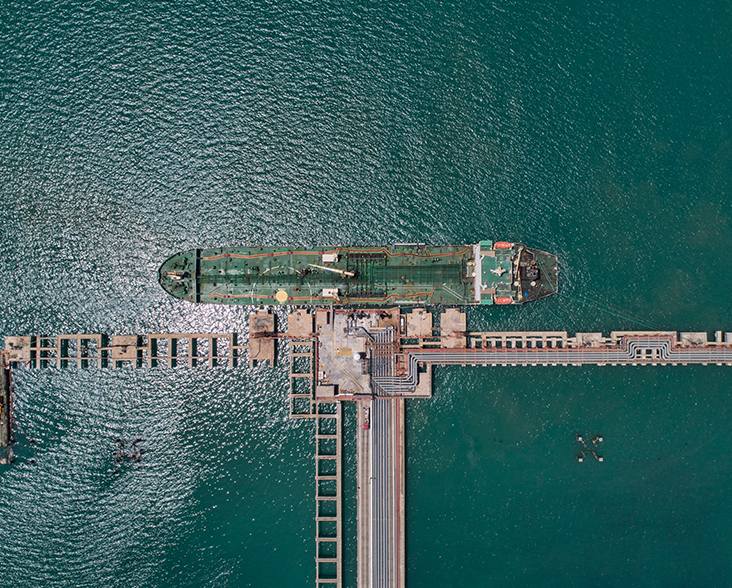
At Nayara Energy Vadinar Refinery, crude arrives through a Single Point Mooring. It then moves to the Crude Oil Tankage area, through pipelines.
Then the crude is blended to the required specifications before refining begins.
Crude oil first goes through pre-treatment. Water, salts and other unwanted materials are removed.
Step 2: Atmospheric Distillation
The crude is heated in a furnace. It partially turns into vapour.
It then enters a large distillation column. As it heats up, the different parts separate based on how quickly they boil.
Lighter materials rise higher. Heavier materials stay lower.
This is an essential part of crude oil processing.
Step 3: Vacuum Distillation
Some heavy material remains after atmospheric distillation. It is then sent to a vacuum distillation unit.
The process takes place at lower pressure. This helps separate heavy components at lower temperatures.
These streams then go for further processing.
Step 4: Conversion
Some heavy fractions need more processing. Cracking breaks large molecules into smaller ones.
Hydrocracking, catalytic cracking and thermal cracking help produce lighter fuels. Reforming changes the structure of some hydrocarbons.
These processes help increase the value of crude oil.
Step 5: Treatment and Blending
The products are treated using hydrogen in presence of a catalyst or a reagent in absence of hydrogen to remove unwanted substances. Sulphur is one example.
They are then blended to meet quality and performance standards.
Step 6: Storage and Distribution
Finished products are moved to storage tanks. They are then dispatched by road, rail, pipeline and jetty.
This completes the main crude oil refinery process.
Simple Refinery Process Flow
Crude Oil → Pre-Treatment → Distillation → Conversion → Treatment → Blending → Storage → Distribution
What Are the Main Stages of Petroleum Refining?
Separation
Separation is the first stage of petroleum refining. Distillation splits crude into different fractions.
Each fraction is then processed further.
Conversion
Conversion changes heavy fractions into lighter products. Catalytic cracking, thermal cracking and hydrocracking are common examples.
Treatment
Treatment removes unwanted substances before the products are blended to meet quality standards.
Together, these stages form modern crude refining.
What Equipment Is Used in Crude Oil Processing?
Desalter
A desalter removes water and salts from crude oil. It helps protect refinery equipment.
Distillation Column
The column separates crude into different fractions. Refineries use atmospheric and vacuum columns.
Catalytic Cracker and Reformer
A catalytic cracker helps break heavy molecules. A reformer changes the structure of hydrocarbons.
Hydrotreater
A hydrotreater helps remove sulphur and other unwanted compounds. It uses hydrogen and a catalyst.
These units are important for crude oil processing.
What Products Are Obtained from Crude Refining?
| Product | Common use |
|---|---|
| LPG | Cooking and industrial use |
| Petrol | Cars and motorcycles |
| Diesel | Trucks, buses and machinery |
| Jet fuel | Aviation |
| Lubricants | Engines and machinery |
| Bitumen | Roads and construction |
| Petrochemical feedstocks | Plastics and chemical products |
These products show the value of crude refining. One barrel of crude can provide many useful products.
Why Is the Crude Oil Refinery Process Essential?
It turns crude oil into fuels we can use
Raw crude oil cannot be used as it is. Refining turns it into fuels like petrol and diesel.
Supports Transport and Industry
Refined products support transport, construction, manufacturing and shipping.
Makes Better Use of Crude Oil
Different fractions can be processed in different ways. This helps refineries get more value from crude.
This is why understanding how crude oil refined matters to the energy sector is.
Explore Nayara Energy's Crude Oil Refining Capabilities
Nayara Energy operates an integrated refinery in Vadinar, Gujarat. Its refinery has a crude processing capacity of 20 MMTPA.
| Area | Nayara Energy |
|---|---|
| Location | Vadinar, Gujarat |
| Capacity | 20 MMTPA |
| Products | LPG, Transportation Fuels, LPG, bitumen, polymers and more |
| Dispatch | Road, rail, pipeline and jetty |
| Customers | Retail and industrial sectors |
The refinery serves many industries. These include power, mining, infrastructure and shipping.
For businesses looking for a reliable crude oil refining company, Nayara Energy offers an integrated refining and supply network.
Nayara Energy's Vadinar Refinery Capabilities
Nayara Energy's Vadinar refinery follows a clear process. Crude first arrives through the Single Point Mooring. It then moves to crude oil tankage.
The crude is separated, converted and treated before products are stored and dispatched.
Nayara Energy, one of the best oil companies in India, also recovers propylene from the LPG stream, which is used to make polypropylene.
The company supplies products such as HSD, LDO, bitumen and petcoke to industries across India.
The crude oil refinery process turns raw crude into useful products. It starts with separation. It then moves to conversion and treatment.
The refining of petroleum supports transport, industry and everyday life. It also helps refineries make better use of crude oil.
Understanding how crude oil is refined makes the role of a refinery easier to understand. A modern refinery does much more than produce fuel. It turns different parts of crude into products for many industries.
FAQs
What are the main stages of petroleum refining?
The main stages are separation, conversion and treatment.
What products come out of crude oil processing?
Products include LPG, petrol, diesel, jet fuel, lubricants, bitumen and petrochemical feedstocks.
How long does it take to refine crude oil?
The time varies by refinery and process because refining happens across multiple units, many of which operate continuously.
Why does crude oil need to be refined before use?
Crude contains many different hydrocarbons. Refining separates and treats them to make useful products.
What are the three types of refineries?
Refineries are often grouped as simple, complex or highly complex. The difference depends on their processing units and capabilities.
0