Related Article

What Are Hydrocarbons? Types, Examples and Their Role in Petroleum Refining
We all have at times wondered what the petrol and diesel we use every day are made of. They are made from crude oil, and that crude oil contains hydrocarbons. The basic hydrocarbon meaning is that it is made of hydrogen and carbon. We can also understand this from its name, 'hydrocarbon'.
While listening, hydrocarbons may seem like simple substances. But they are the main compounds behind products like plastics, synthetic fibres and many other products we use on a daily basis. They are also useful for petroleum refining and meeting India's energy needs. Hence, in this blog, we will talk about hydrocarbons. Let's understand their types, examples, properties, uses and also their environmental impact.
Key Takeaways
- Hydrocarbons only have carbon and hydrogen.
- There are five main types of hydrocarbons – alkanes, alkenes, alkynes, cycloalkanes and aromatic hydrocarbons.
- They are used to make things like fuel, plastics, chemicals and lubricants.
- Different hydrocarbons act differently, mostly because of how they are formed.
- Hydrocarbons can catch fire.
- Oil spills and smoke from fuel can harm the environment.
What Are Hydrocarbons?
We will understand it in the simplest way. A hydrocarbon is a compound consisting of only two elements, that is, carbon and hydrogen. These elements join in several different ways to form compounds with different properties.
When we break it down, the hydrocarbon meaning is simple. The backbone of it is made of carbon atoms. Attached to the carbon atoms are hydrogen atoms. The type of compound that is formed depends on how many atoms there are and the various ways in which they are joined.
Carbon backbone (meaning): Carbon atoms come together to form chains or even rings, with hydrogen atoms attached.
Hydrocarbons are important because they provide energy. They are also used to make many products which are used in homes and industries.
Types of Hydrocarbons
The types of hydrocarbons are divided based on their formation and the different kinds of bonding that happen between carbon atoms. Sometimes they have single bonds. Sometimes they have double or triple bonds. Aromatic hydrocarbons have an interesting structure, in which their carbon atoms form a ring-like structure. Their formation makes aromatic hydrocarbons more stable.
| Type | Bonding or structure | Example |
|---|---|---|
| Alkanes | Single bonds | Methane |
| Alkenes | At least one double bond | Ethene |
| Alkynes | At least one triple bond | Ethyne |
| Cycloalkanes | Saturated carbon rings | Cyclohexane |
| Aromatic hydrocarbons | Aromatic ring with shared electrons | Benzene |
These differences make each hydrocarbon react in different ways and have different uses. Let's look at each type as follows:
Alkanes
Alkanes are hydrocarbons that have only single bonds between the carbon atoms. They are also called saturated hydrocarbons, as they have the maximum possible number of hydrogen atoms. For open-chain alkanes, the general formula is CₙH₂ₙ₊₂.
They are present in natural gas and also in many fuel mixtures. They usually react less easily as compared to alkenes and alkynes, but they can burn to release energy.
Examples:
- Methane (CH₄): Also, the main component of natural gas.
- Propane (C₃H₈): This one is used in liquefied petroleum gas (LPG).
Alkene
Alkenes have at least one double bond between carbon atoms. Open-chain alkenes having one double bond generally have the formula CₙH₂ₙ. They react a little more easily than alkanes and are also important for making plastics.
- Ethene (C₂H₄): This one is used to make polyethylene, a common plastic we use.
- Propene (C₃H₆): It is used to make polypropylene which is usually found in packaging and some household products.
Alkenes can also take part in addition reactions, where other atoms join across the double bond.
Alkynes
Alkynes contain at least one triple bond between carbon atoms. Open-chain alkynes with one triple bond generally follow the formula CₙH₂ₙ₋₂.
Ethyne, also called acetylene, is used in certain welding and metal-cutting processes. Propyne is another example. Alkynes can take part in addition reactions and can be used to make other chemicals.
Cycloalkanes
Cycloalkanes are saturated hydrocarbons in which the carbon atoms form a ring. Cyclohexane is a common example. It is used in the manufacture of materials such as nylon.
- How they differ: Ring structure can affect their boiling points and also chemical behavior. Small rings can also have extra strain, which makes them more reactive.
Aromatic Hydrocarbons
Aromatic hydrocarbons are hydrocarbons based upon one or more aromatic rings. In these rings some of the electrons are shared throughout the structure instead of just between two carbon atoms. This makes the ring more stable.
- Benzene (C₆H₆): It is a starting material for making other chemicals.
- Toluene (C₇H₈): This one is used in some industrial solvents and chemical processes.
These things are important in making products like resins, dyes and some more industrial materials. A few aromatic compounds can be harmful, so they need to be handled carefully.
Hydrocarbon examples and common compounds
We may not see hydrocarbons directly. But they are used in many things around us. They are present in large amounts in fuels and some industrial products.
The table below also gives a simple petroleum hydrocarbons list, showing how different hydrocarbon groups relate to common refinery products.
| Compound or group | Formula or range | Common use or product |
|---|---|---|
| Methane | CH₄ | Natural gas |
| Ethane | C₂H₆ | Petrochemical feedstock |
| Propane | C₃H₈ | LPG |
| Butane | C₄H₁₀ | LPG and fuel blends |
| Ethene | C₂H₄ | Plastic production |
| Propene | C₃H₆ | Plastic production |
| Gasoline-range hydrocarbons | A mixture of lighter hydrocarbons | Petrol |
| Diesel-range hydrocarbons | A mixture of heavier hydrocarbons | Diesel |
| Heavy hydrocarbons | Larger molecules and complex mixtures | Heavy oils and bitumen |
A few things are worth remembering:
- Ethene and propene are important raw materials for making plastics and other chemicals.
- The exact composition of a petroleum product varies with the crude oil and the refining process.
Physical and Chemical Properties
Most hydrocarbons do not mix well with water. They are generally less dense than water and dissolve more easily in many organic solvents. Their boiling and melting points usually rise as their molecules get larger. Branching can also change these temperatures.
Their chemical behaviour depends on their structure. Alkanes mostly do substitution reactions, while alkenes and alkynes do addition reactions. Aromatic hydrocarbons often react through substitution, keeping their ring structure stable.
Two common responses are:
- Combustion: Hydrocarbons react with oxygen and release energy. Complete combustion mainly produces carbon dioxide and water.
- Industrial processing: Cracking splits larger hydrocarbons into smaller molecules and reforming changes the structural formation of hydrocarbons to improve the properties of some products.
These processes help refineries make products used for various purposes.
Uses and role in energy and petrochemicals
Hydrocarbons are a part of transport fuels, cooking gas, industrial heating and power generation. They are also used to make lubricants and chemicals. Then they are used to make plastics, synthetic fibres and some other products.
Petroleum refining turns crude oil into useful products through the following steps:
Crude oil → Separation → Conversion and treatment → Fuels and other products
First, crude oil is heated. It helps separate them into different fractions. These fractions can then be processed further to make products such as petrol, diesel and aviation fuel. Some refinery streams also provide raw materials for the petrochemical industry.
A petroleum hydrocarbon may be contained in a fuel or other product derived from crude oil. Its properties and composition help determine how it is processed and where it can be used.
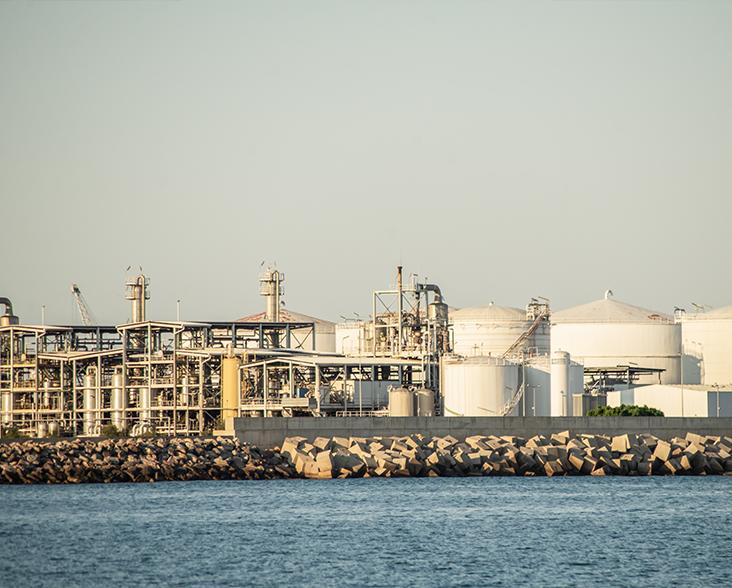
Refining is the most important step for India to meet the nations' energy demand and support industries. Nayara Energy's Vadinar refinery is part of this domestic energy network. Here, we process crude oil into products that are used for transport and other energy needs.
Environmental and Safety Aspects
Hydrocarbons are very useful but we need to be careful while handling it. Many of them are flammable. Their vapors can create safety problems. Burning fuels anyway produces carbon dioxide. Incomplete combustion also produces harmful air pollutants.
Leaks and oil spills affect soil and water on a large scale. A petroleum hydrocarbon spill may leave a mixture of compounds in the environment. These are often assessed under the term total petroleum hydrocarbons (TPH). Monitoring helps identify contamination and guide clean-up work.
But it is possible to reduce risks with these three basic steps:
- Store fuels safely: Use proper containers and keep them away from heat and ignition sources.
- Check for leaks: Use monitoring systems to detect methane and other volatile hydrocarbons.
- Respond quickly to spills: Contain the spill, prevent it from spreading and arrange proper clean-up.
Good safety practices protects workers, nearby communities and also the environment.
Conclusion
The hydrocarbon meaning comes down to two basic elements: carbon and hydrogen that we all know. The main types are: alkanes, alkenes, alkynes, cycloalkanes and aromatic hydrocarbons. Each one has a different structure and set of uses.
Hydrocarbons remain very important for energy, petroleum refining, and the production of everyday materials. Understanding their properties also helps us use and handle them more safely. Learning how crude oil is refined is a useful step in understanding how these compounds become the products we use and how the best oil companies in India contribute to meeting the country's energy needs.
FAQs
1. Is water a hydrocarbon?
No. Water is made of hydrogen and oxygen. Hydrocarbons contain carbon and hydrogen. The combination is different.
2. What are the first ten alkanes?
The first ten alkanes are methane, ethane, propane, butane, pentane, hexane, heptane, octane, nonane and decane. Their carbon chains grow longer in that order.
3. What is the composition of liquefied petroleum gas?
LPG mainly contains propane, butane or a mixture of the two. The exact mix can be different based on the supplier and location.
4. What defines total petroleum hydrocarbons?
Total petroleum hydrocarbons, or TPH, is a term. It is used to measure the combined amount of hydrocarbon compounds found in crude oil and petroleum products in a sample. It is often used when checking soil or water for contamination.
5. How many carbon atoms are in heptane?
Seven carbon atoms are there in Heptane. Its chemical formula is C₇H₁₆.
0